Product features
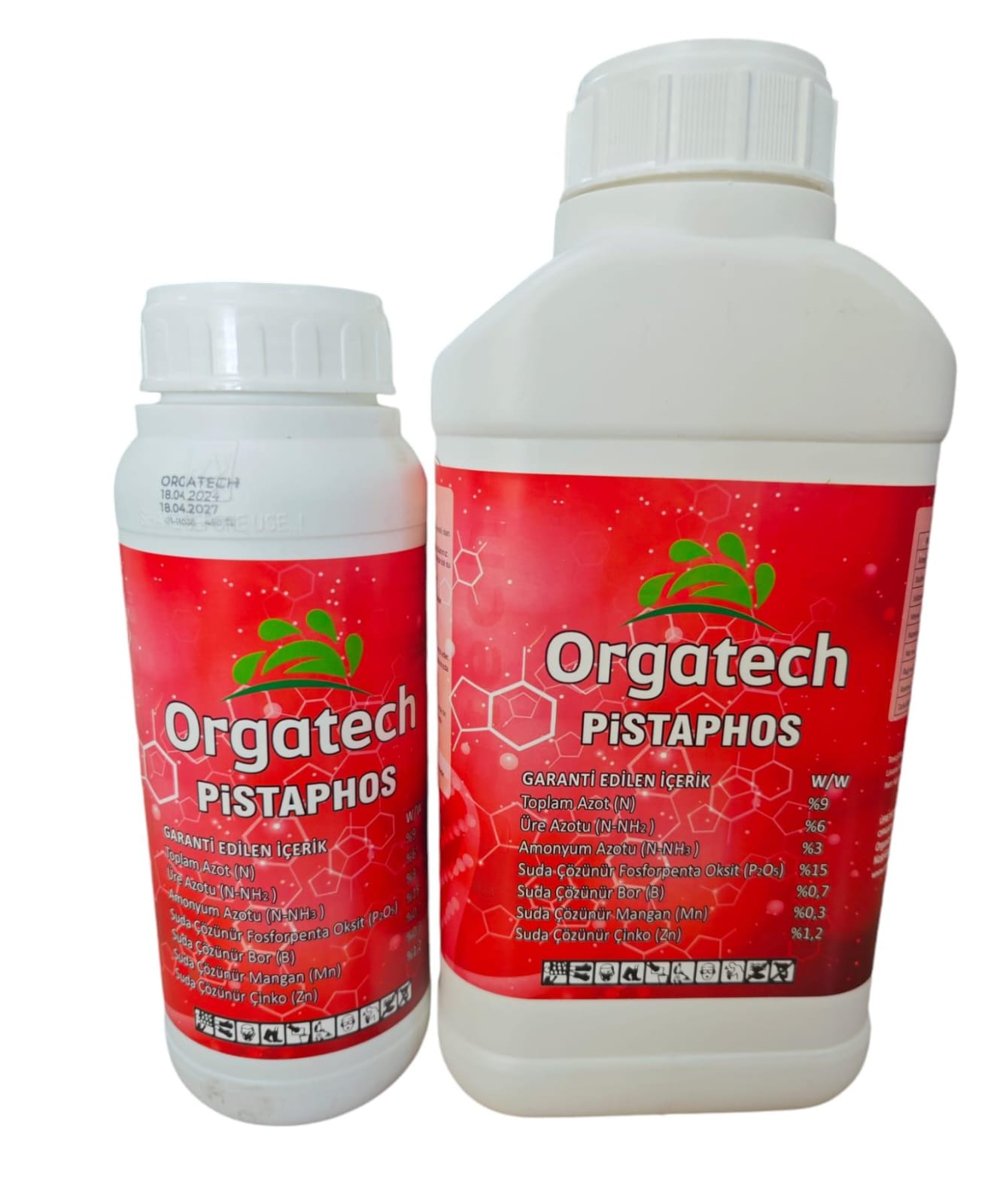
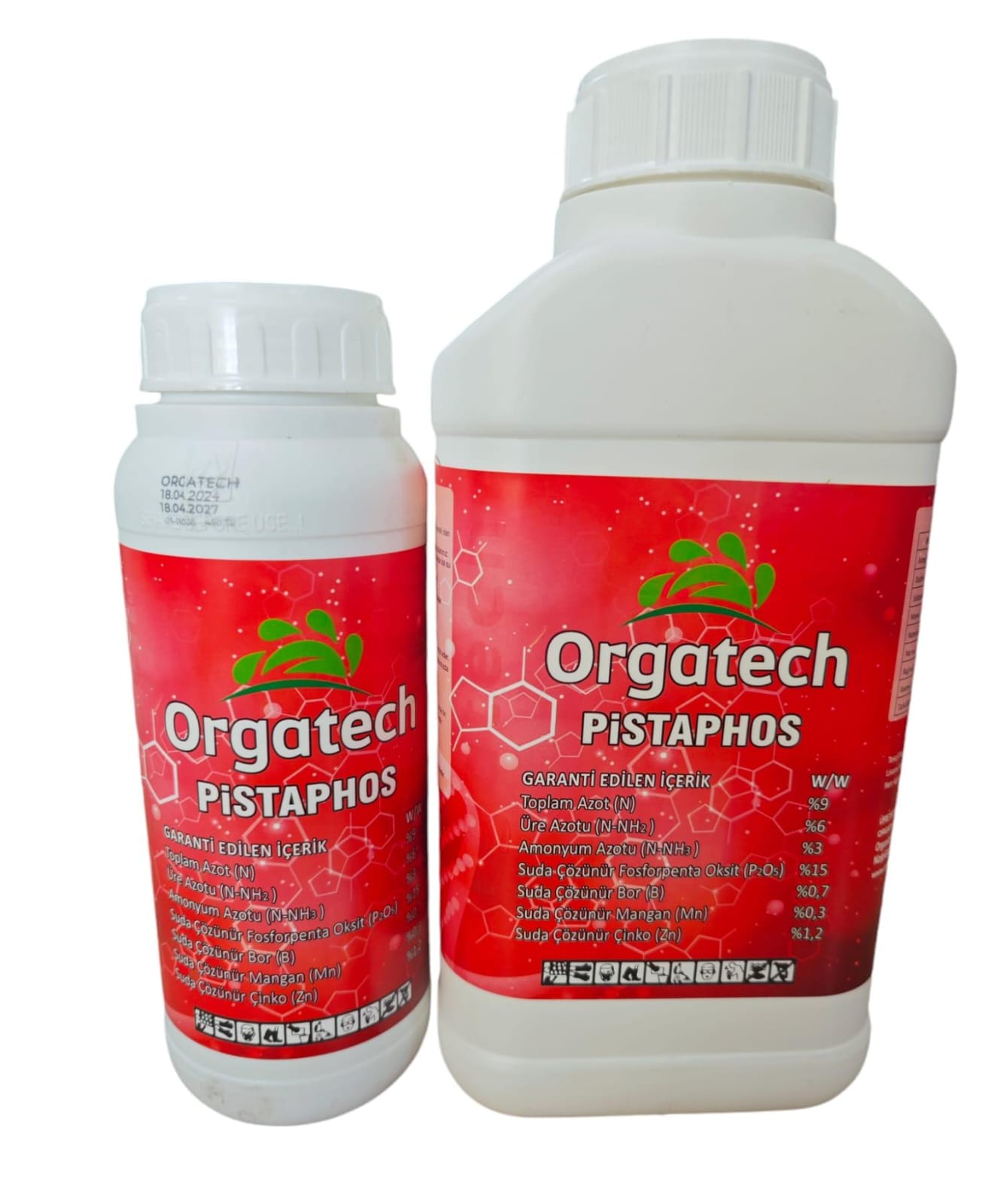
PİSTAPHOS
| Nitrogen(N) | 9 |
| Zinc(Zn) | 1,2 |
| Phosphor(P2O5) | 15 |
| Manganese(Mn) | 0,3 |
| Boron(B) | 0,7 |
All are chelated with EDTA.
| AREA OF USE | TIME OF USE | LEAF APPLICATION |
| pistachios | During and after development | 300-600 ml per 100 L of Water |
| Almond | During and after development | 300-600 ml per 100 L of Water |
| in vegetables | During and after development | 300-600 ml per 100 L of Water |
| In Fruit Trees | During and after development | 300-600 ml per 100 L of Water |
| Citrus and Pomegranate | During and after development | 300-600 ml per 100 L of Water |
| Strawberries and Grapes | During and after development | 200-400 ml per 100 L Water |
| Vineyard and Olives | During and after development | 300-600 ml per 100 L of Water |
| Cut Flowers | During and after development | 200-400 ml per 100 L of water |
| Farm plants | During and after development | 300-600 ml per 100 L of Water |
Our specially produced product, which is a first with this feature, encourages fertilization and fruit set thanks to the high amount of phosphorus in its foliar application. Thanks to the nitrogen it contains, it provides nutrition to the leaves, shoots, flowers and fruit organs of the plant by establishing plant resistance and vegetative balance. While it contains all micronutrient elements such as molybdenum, magnesium and iron, as well as boron and zinc, in a chelated form, Phospoly, which is enriched with animal and vegetal amino acids, promotes the development of all organs and parts of our plants and the setting of flowers and fruits. It contributes to DNA and RNA synthesis by activating plant hormones. With its special formulation, it plays an active role in cell elongation, growth and division. It creates a rapid interaction in plants by absorbing from leaf and stem lenses, while minimizing fruit bud drop. It is recommended to apply the product in three periods: before opening, after fruit setting and after harvest.
It accelerates the formation of plant green parts…
Promotes flowering…
It has a direct effect on fertilization…
It increases fruit, spike, head and cluster setting…
It ensures the establishment of generative and vegetative balance in the plant…
It increases the amount of solid matter in the body and protects the plant against cold…
It prevents stunting and dwarfism…
It absorbs and interacts quickly from the leaf…
Thanks to the animal and plant amino acids it contains, it prevents the plant from getting stressed…
It increases resistance and strength, makes the plant healthy…
It increases the brix and solid matter rate at harvest…
It improves the quality of pollen dust…
It provides high efficiency and yield per unit area…
It contains high levels of available Nitrogen and Phosphorus…
In addition to macro elements, it contains chelated micronutrients Manganese, Boron and Zinc.
Product Gallery
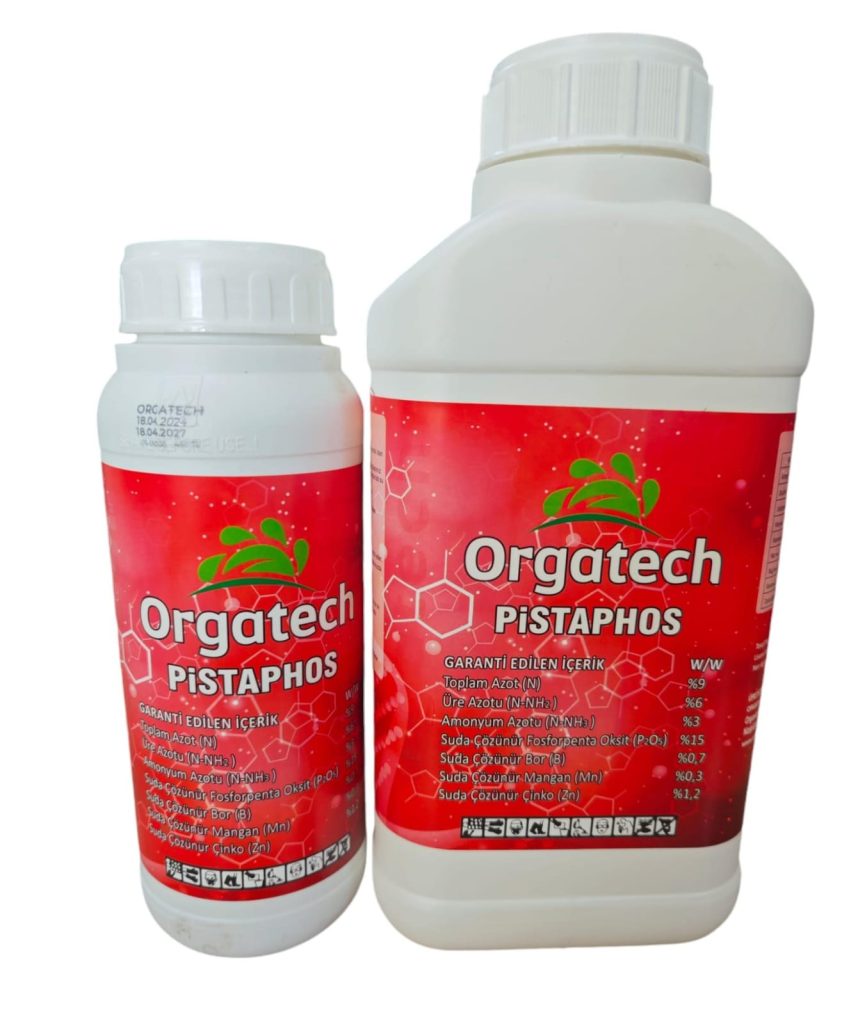
Pistaphos 
Orgatech X3 Ec Tescil Belgesi (03.12.2020)Pistaphos 9-15-0+Me 
Güvenlik Bilgi Formu Pistaphos 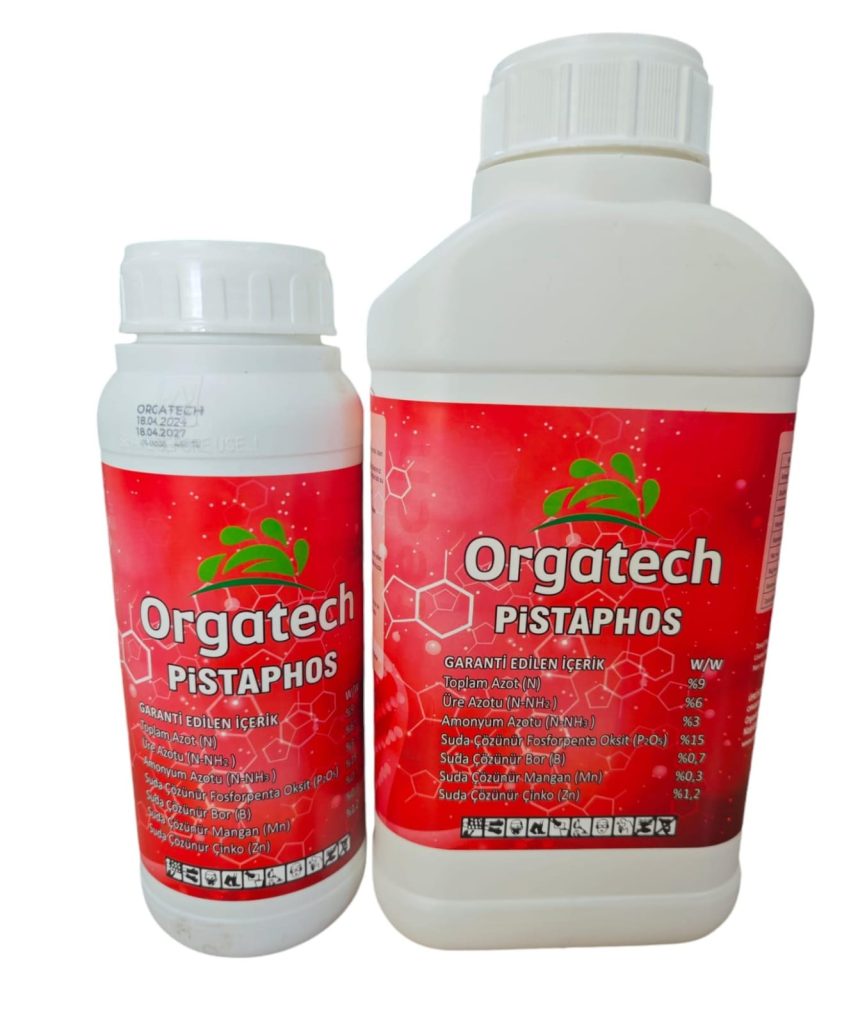
 The plant accelerates the formation of green parts…
It promotes flowering…
It has a direct effect on fertilization…
Increases fruit, spike, head and cluster attitude…
It ensures the establishment of generative and vegetative balance in the plant.
It increases the amount of solid matter in the body and protects the plant against cold.
It prevents stunting and dwarfing…
It absorbs and interacts quickly from the leaf…
Thanks to the animal and vegetable amino acids in it, it prevents the plant from getting stressed.
It increases resistance and endurance, makes the plant healthy…
It increases the brix and solids ratio at harvest…
It improves the quality of pollen dust…
It provides high yield and yield per unit area…
It contains highly available Nitrogen and Phosphorus…
In addition to macro elements, it contains chelated micronutrients such as Manganese, Boron, Zinc…